
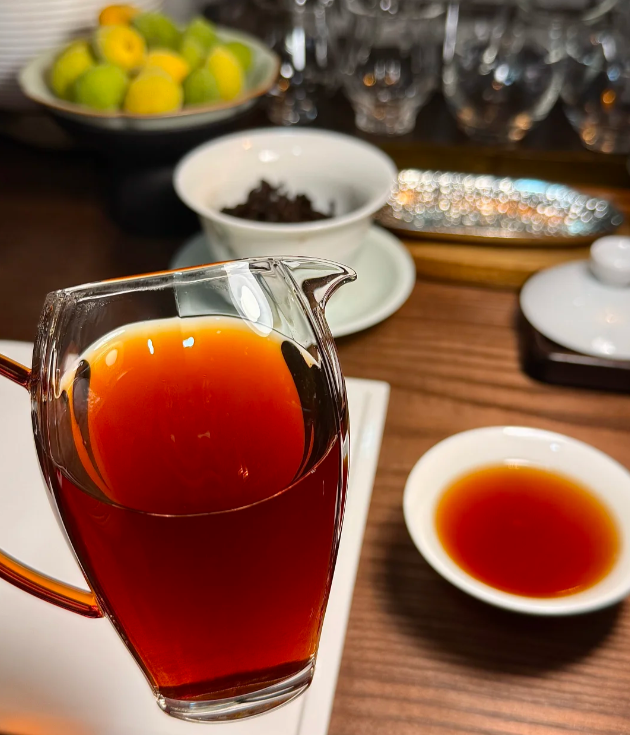
A practical Gongfu guide for raw and ripe Pu-erh, with a longer-steep option for a regular teapot.

Hot water, a small vessel and short infusions are all you need to begin.
5–6 g tea · 100 ml vessel · 95–100°C · short infusions
Pu-erh tea can seem complicated at first. There are raw and ripe styles, teas from different mountains and years, and many opinions about the “right” way to brew them.
The good news is that you do not need a complicated setup to make a satisfying cup.
A reliable starting point is 5-6 g of Pu-erh tea in a 100 ml teapot or gaiwan, brewed with 95-100°C water and short infusions. Begin with a quick rinse, then make the first drinking infusion for about seven seconds. From there, adjust by taste.
↑Watch the 1 minute 46 second Pu-erh brewing guide.
This guide follows the simple Gongfu method demonstrated in our video and explains how to adapt it to the tea in front of you.
Pu-erh Brewing Guide at a Glance
| Brewing detail | Recommended starting point |
|---|---|
| Tea | 5-6 g |
| Vessel capacity | 100 ml (before adding leaves) |
| Teaware | Yixing teapot or porcelain gaiwan |
| Water temperature | 95-100°C |
| Rinse | 7-10 seconds, then discard |
| First drinking infusion | About 7 seconds |
| Later infusions | Begin short, then gradually add time |
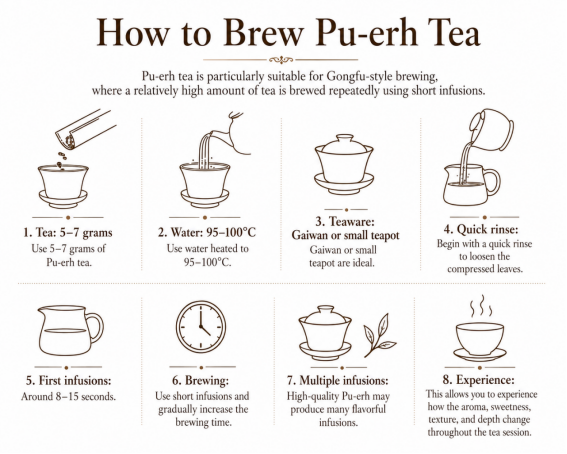
The complete Pu-erh brewing sequence at a glance.
These are starting points rather than strict rules. Here, 100 ml refers to the capacity of the teapot or gaiwan before adding leaves, not an instruction to pour exactly 100 ml onto the tea. Leaf size, compression, age, storage and taste all affect the result.
What You Need
You only need a few basic items:
- Pu-erh tea
- A 100 ml Yixing teapot or porcelain gaiwan
- A kettle
- A fairness pitcher
- One or more small cups
- A small scale, if available
- Fresh water with a clean, neutral taste
A fairness pitcher is especially useful. Emptying the teapot completely into the pitcher separates the drink from the leaves, helps prevent over-steeping between infusions and gives everyone tea of the same strength.
If you do not own a Yixing teapot, use a glazed porcelain gaiwan. Porcelain is neutral, easy to clean and particularly useful when comparing several teas because it does not retain their aromas.
Pu-erh Tea Steep Time
For the Gongfu recipe in this guide, rinse for 7–10 seconds, pour it away, then begin with a drinking infusion of about 7 seconds. Keep the next infusions short and lengthen them when the flavor becomes lighter. Filling and pouring also take time, so a slow-pouring pot may need less waiting before you start to decant.
The longer 2–3 minute infusion below is for a much lower leaf-to-water ratio in a regular teapot or mug. Do not combine that long steep with the concentrated Gongfu dose.
How to Brew Pu-erh Tea Step by Step
Heat the Water
Bring fresh water to approximately 95-100°C.
Ripe Pu-erh and well-aged raw Pu-erh usually respond well to water close to boiling. If a younger raw Pu-erh becomes too bitter or sharp, begin around 95°C and adjust from there.
Water matters as much as temperature. Very hard or strongly chlorinated water can flatten the aroma and make the texture feel rough. Filtered water with a clean, neutral taste is a good place to begin.
Warm the Teaware
Pour hot water into the teapot or gaiwan, then into the fairness pitcher and cups. Discard the water.
Warming the teaware reduces heat loss during the first infusion and prepares the cups for the tea’s aroma.
Measure the Tea
Place 5-6 g of Pu-erh tea into a 100 ml vessel.
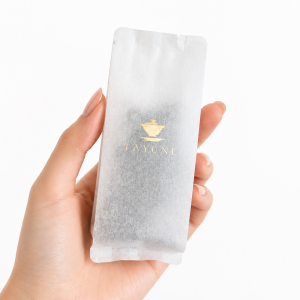
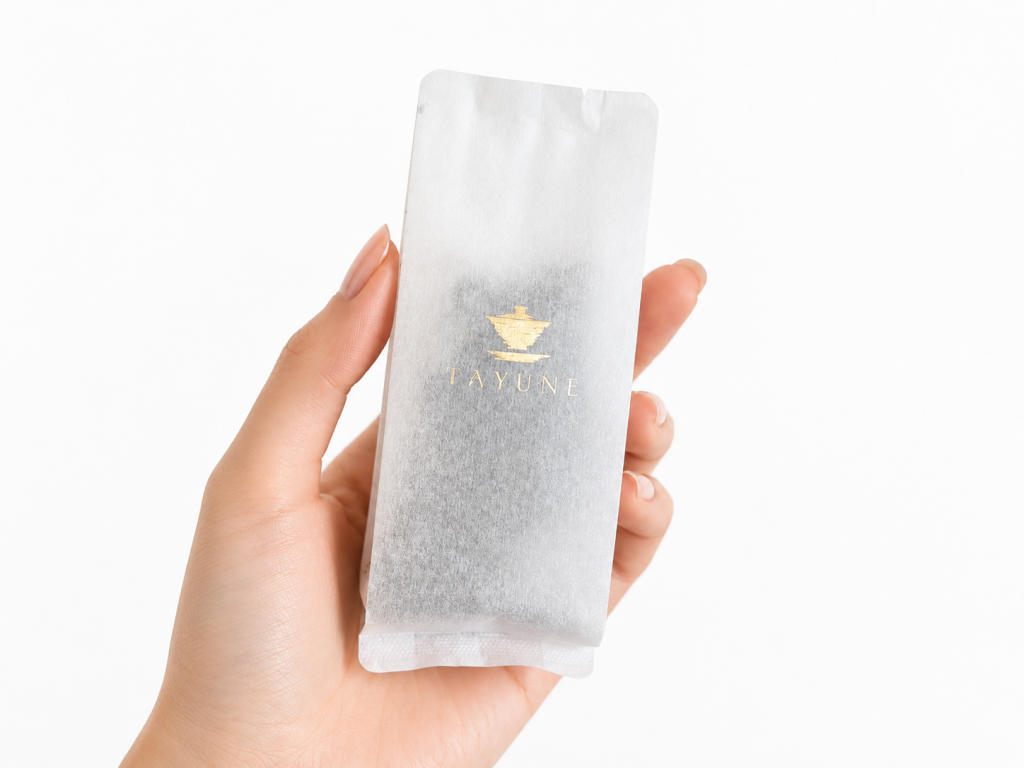
If you are brewing one of the 10 g sachets from our Grand Yunnan Pu-erh Discovery Set, you can use approximately half a sachet in a 100 ml vessel. For a fuller 150 ml session, use the complete 10 g sachet and adjust the infusion time to taste.
Compressed leaves may look small before brewing, but they will loosen and expand once water is added. Leave enough room for them to open.
Rinse and Awaken the Leaves
Pour hot water over the leaves and allow them to sit for 7-10 seconds. Empty this infusion completely and do not drink it.
This quick rinse warms the leaves, loosens compressed pieces and begins to release their aroma. Avoid leaving the rinse for too long, especially with a delicate raw Pu-erh, as it can remove some of the tea’s livelier opening character.
After discarding the rinse, lift the lid and smell the warmed leaves. This is often one of the most aromatic moments of the session.
Make the First Drinking Infusion
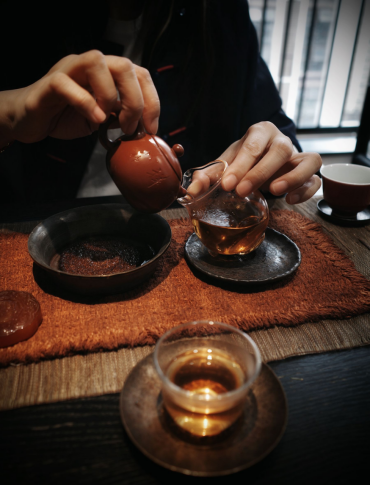
Pour every infusion completely so the leaves do not continue extracting.
Add hot water again and steep for approximately seven seconds.
Pour the tea completely into the fairness pitcher. Do not leave a small amount of liquid sitting with the leaves, as it will continue extracting and may make the next infusion unexpectedly strong.
Pour from the fairness pitcher into the cups and take a moment to notice the aroma, texture and finish before brewing again.
Continue with Short Infusions
For the next few infusions, continue with short brewing times. When the tea begins to taste lighter, add a few seconds to each infusion.
There is no need to follow a rigid schedule. Tightly compressed tea may need more time to open, while loose leaves may release flavour almost immediately. Let the cup guide you:
- If the tea is strong, bitter or drying, pour sooner.
- If it is thin or quiet, steep a little longer.
- If the leaves have cooled between infusions, use hotter water or allow slightly more time.
One of the pleasures of Pu-erh is following the tea as it changes. Aroma, sweetness, body and aftertaste may develop differently from one infusion to the next.
Raw vs. Ripe Pu-erh Brewing
The same basic method works for both, but small adjustments can produce a more balanced cup.
| Tea style | Suggested temperature | What to watch for |
|---|---|---|
| Younger raw Pu-erh | Around 95°C to start | Reduce time or temperature if bitterness becomes dominant |
| Aged raw Pu-erh | 95-100°C | Hotter water can help open compressed, mature leaves |
| Ripe Pu-erh | Close to 100°C | Use a complete pour to keep the liquor rich but clean |
Raw Pu-erh often develops floral, honeyed, fruity or herbal qualities, sometimes with refreshing bitterness and a lingering sweet finish. Ripe Pu-erh usually gives a darker liquor with a rounder body and notes that may suggest wood, dates, cocoa or aged aromatics.These descriptions are not guarantees. Origin, processing, age and storage give every tea its own character. For a fuller introduction to the two styles, read how Pu-erh tea is classified. If you would like to compare raw and ripe teas side by side, our beginner’s Pu-erh sampler guide explains where to begin.
Yixing Teapot or Gaiwan: Which Should You Use?
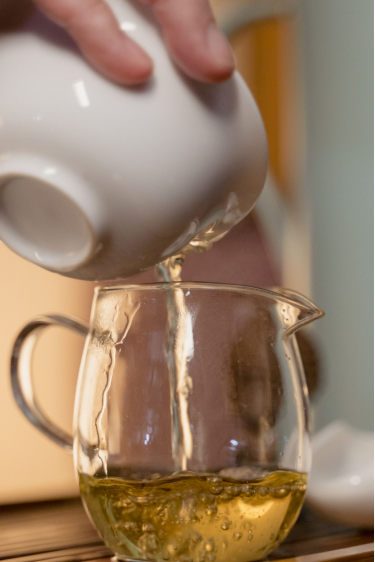
A porcelain gaiwan pours cleanly into a glass fairness pitcher
A small Yixing teapot can work well for repeated Gongfu infusions when its capacity and pour suit the tea.
However, a Yixing teapot is not required.
A porcelain gaiwan is often the easiest choice for a beginner. It lets you see the leaves, pours quickly and does not influence the tea’s aroma. It is also the better option when tasting raw and ripe Pu-erh side by side.
An unglazed clay teapot can gradually absorb traces of aroma from the teas brewed in it. For this reason, many tea drinkers eventually dedicate one clay pot to a particular style of tea. Until you know which Pu-erh style you prefer, porcelain keeps the comparison simple.
Common Pu-erh Brewing Problems
The Tea Tastes Too Bitter or Dry
The infusion was probably too long, the leaf-to-water ratio was too high, or the water was too hot for that particular tea.
Start by shortening the infusion. If the tea is a young raw Pu-erh and still tastes overly sharp, lower the water temperature slightly.
The Tea Tastes Weak or Watery
Use a little more leaf, hotter water or a longer infusion. Also check whether a compressed piece has fully opened. A tightly pressed tea can begin quietly and become much richer after the first few infusions.
One Cup Is Stronger Than Another
Pour the entire infusion into a fairness pitcher before serving. Pouring directly from the teapot into several cups can give the last cup a noticeably stronger brew than the first.
The Tea Becomes Too Strong Between Infusions
Make sure the pot or gaiwan is completely empty after every pour. Even a small amount of water left around the leaves continues extracting.
The Aroma Feels Flat
Try fresher water, a warmer brewing vessel or a slightly higher temperature. Smell the warmed leaves immediately after the rinse; some aromas are easier to notice there than in the cup.
How to Brew Pu-erh in a Regular Teapot or Mug
Yes. Gongfu brewing makes it easy to observe how the tea changes, but it is not the only way to enjoy Pu-erh.
For a regular mug or small pot, try 3-4 g of tea in about 300 ml of water. Steep for two to three minutes, taste, and adjust the next brew. Use less leaf and more water than you would for Gongfu brewing because the infusion time is much longer.
The result will be a larger, gentler cup rather than a sequence of concentrated infusions.
Frequently Asked Questions
Do you have to rinse Pu-erh tea?
No method is mandatory, but a brief rinse is common. It warms and loosens the leaves, particularly when the tea is compressed. This guide uses the 7-10 second rinse shown in our brewing video.
What is the best water temperature for Pu-erh tea?
Use 95-100°C as a starting range. Ripe and aged Pu-erh generally tolerate water close to boiling. A younger raw Pu-erh may taste more balanced at the lower end of the range.
How much Pu-erh tea should I use per 100 ml?
Begin with 5-6 g per 100 ml. Increase the amount if you prefer a fuller, more concentrated session, or reduce it if the tea feels too powerful.
How long should the first Pu-erh infusion be?
After a quick rinse, begin with approximately seven seconds for this guide’s 5–6 g / 100 ml-vessel Gongfu recipe. Use the longer times in the regular-teapot section only with its lower leaf-to-water ratio. Taste and adjust rather than treating one number as a rule for every method.
How many times can Pu-erh tea be steeped?
Continue for as long as the leaves give you an enjoyable cup. A good Pu-erh may remain expressive through many short infusions, but the exact number varies with the tea, vessel size, leaf quantity and brewing time.
Can I use a regular teapot?
Yes. Use less leaf if the pot is large, and make sure you can pour the infusion out completely. A small vessel is simply easier for repeated short infusions.
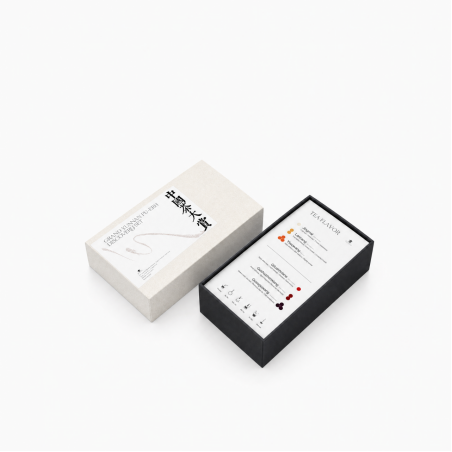
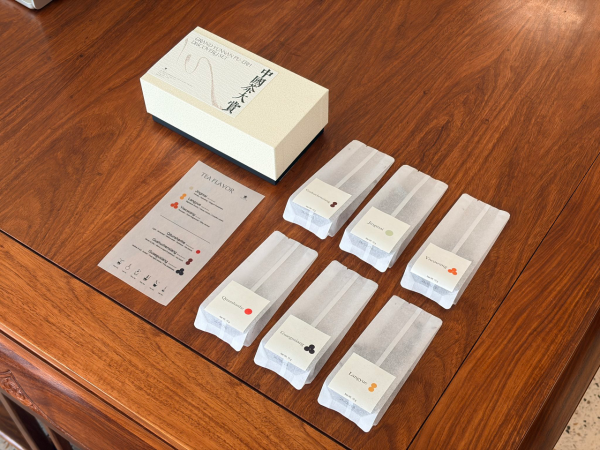
Grand Yunnan Pu-erh Discovery Set: three raw and three ripe teas.
The most useful Pu-erh recipe is not the most complicated one. It is the one that gives you a clear starting point and makes adjustment easy.
Begin with 5–6 g of tea in a 100 ml vessel, a brief rinse and a seven-second drinking infusion. Pour completely, taste carefully and change one variable at a time. For the Discovery Set’s full 10 g sachet, use a 150 ml vessel as described above and adjust the timing to taste.
If you are still discovering which style you enjoy, the Grand Yunnan Pu-erh Discovery Set brings together three raw and three ripe Pu-erh teas in individually labelled 10 g sachets. Brew them with the same method, compare each session and let your own palate decide what to explore next.
Taste slowly. Notice the changes. The leaves will tell you where to go from there.
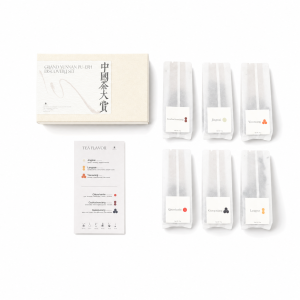
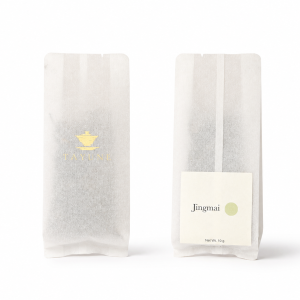
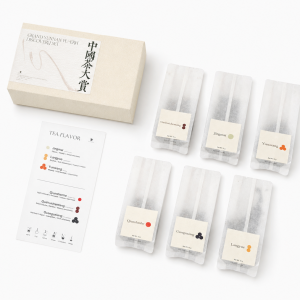
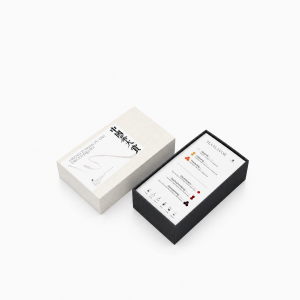
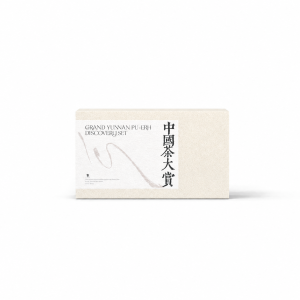
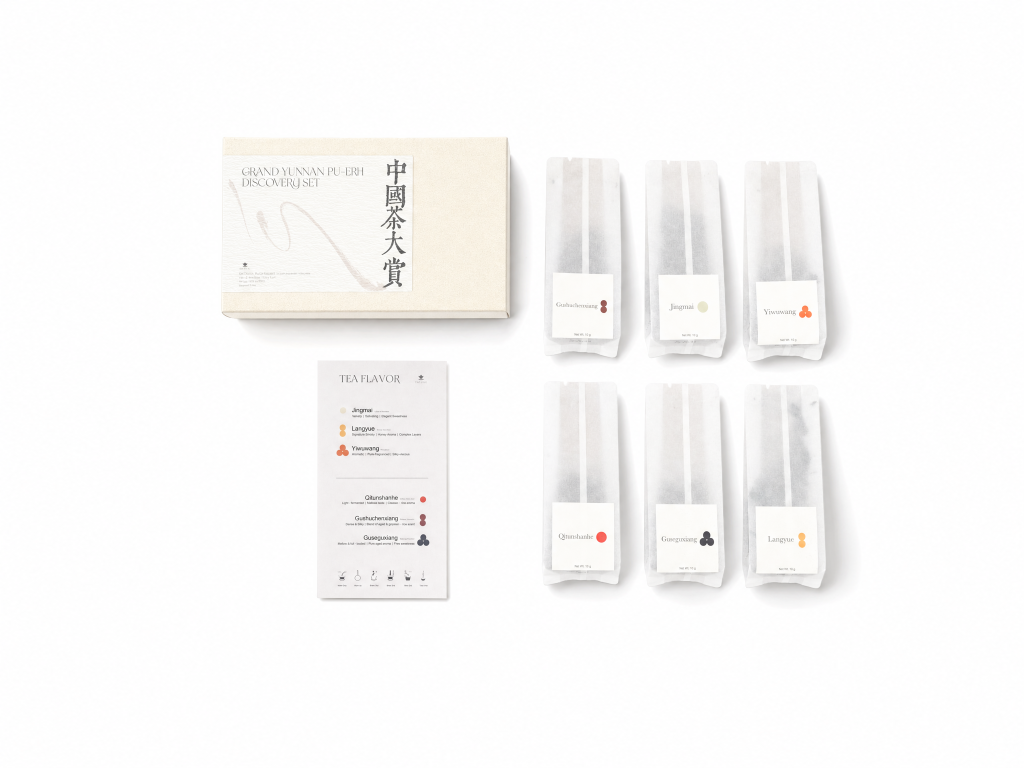
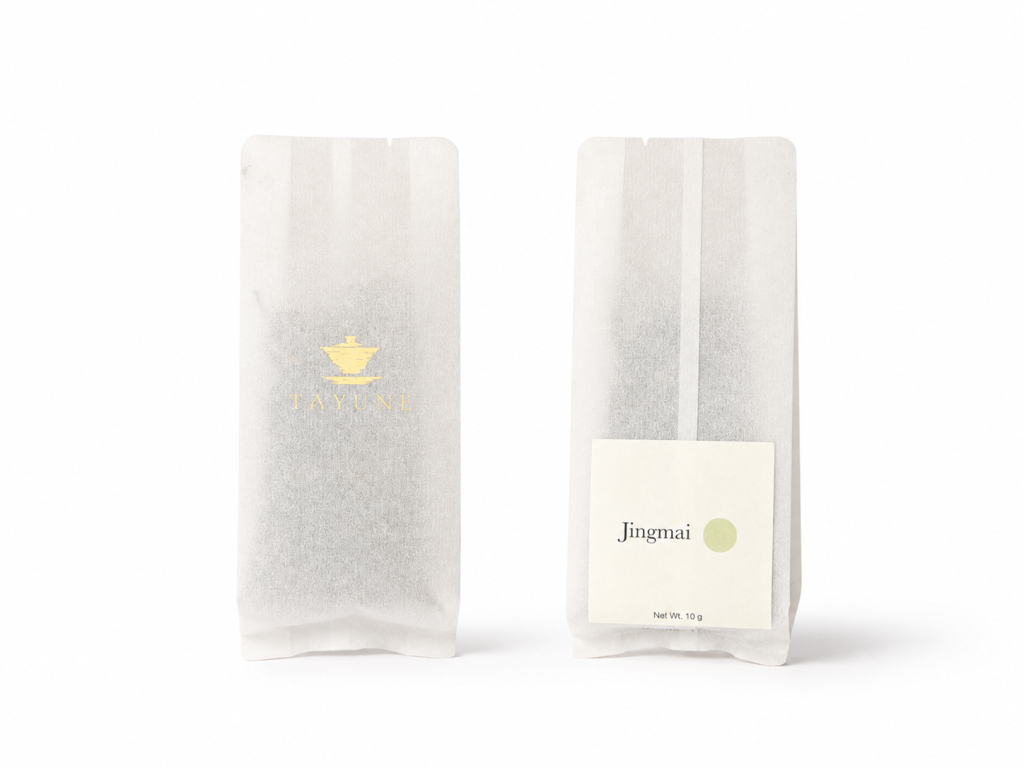
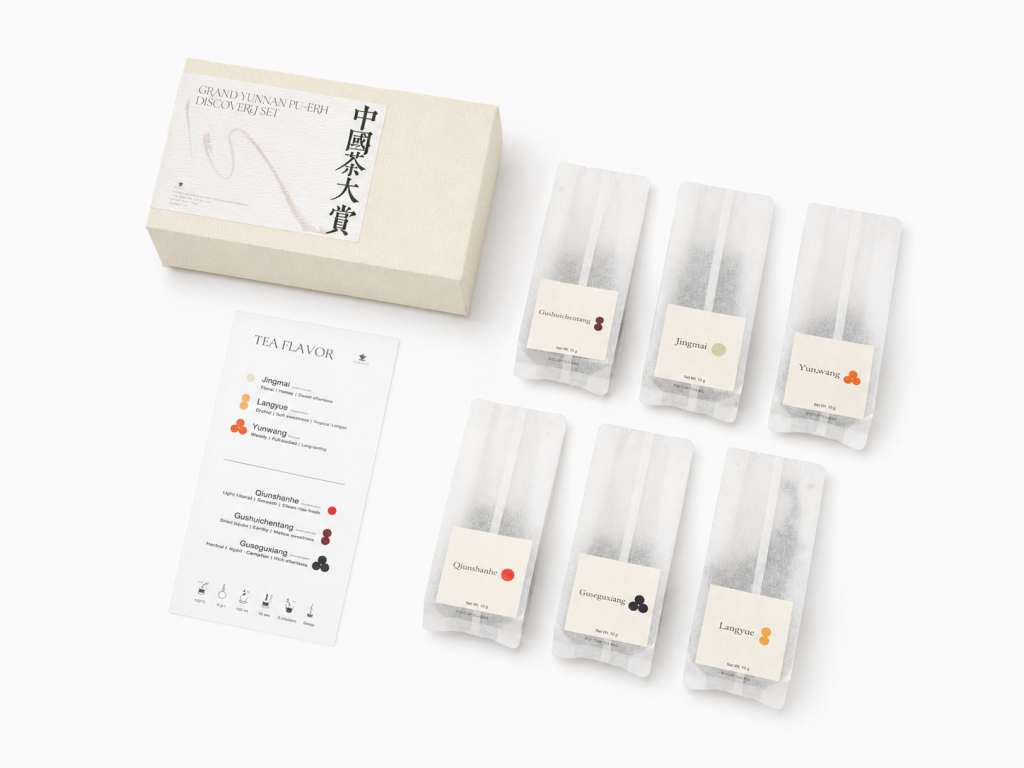
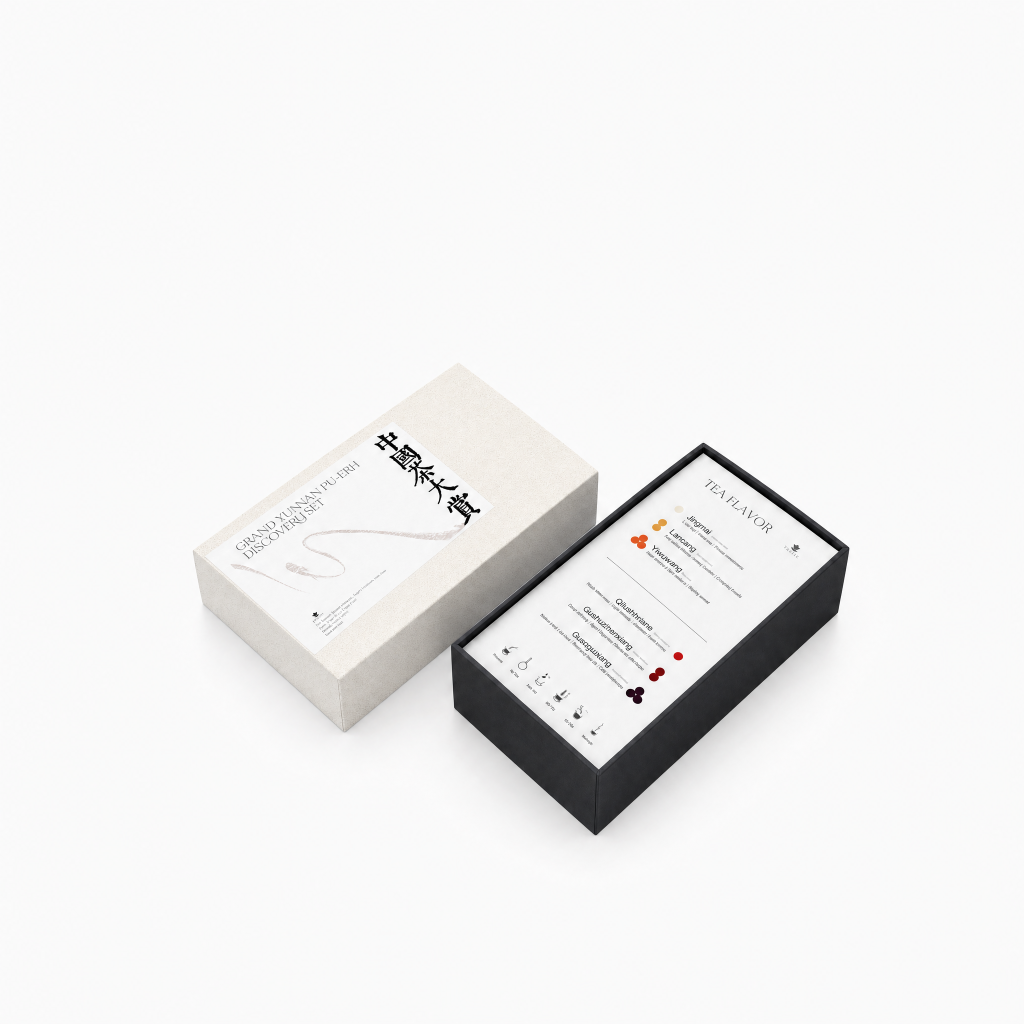
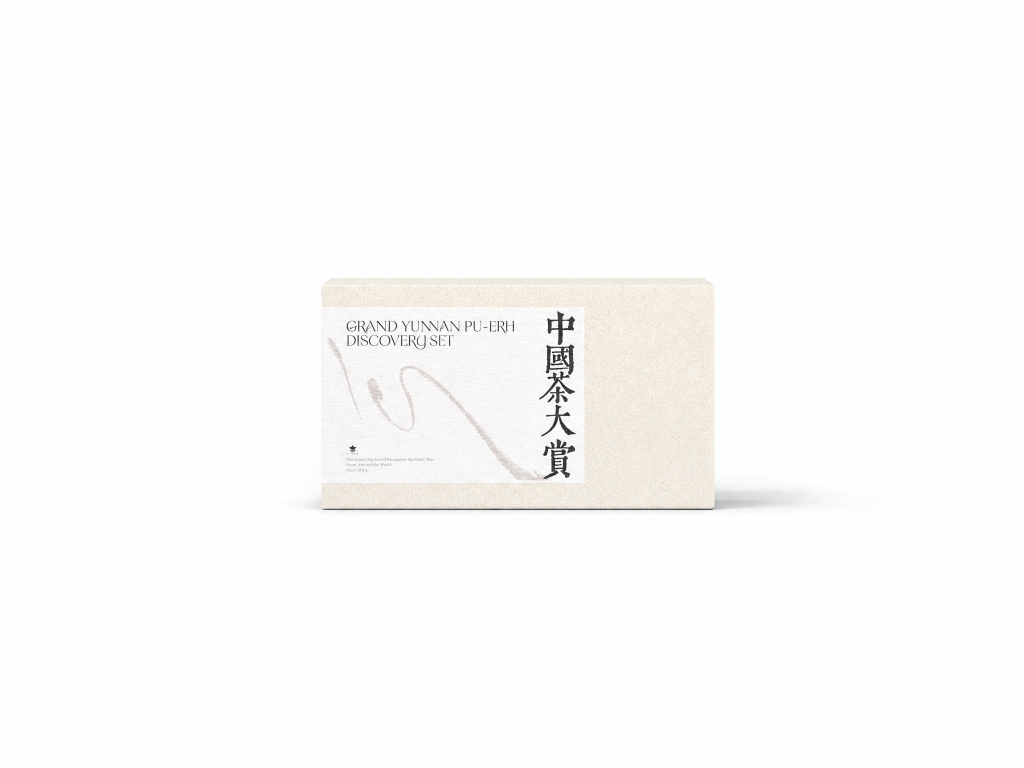
Grand Yunnan Pu-erh Discovery Set – 6 Raw & Ripe Tea Samples, 60 g
A beginner-friendly Pu-erh tasting set with three raw and three ripe teas in six individually labelled 10 g servings. Compare the profiles side by side, find your favourite, then choose a full cake with more confidence.
10 in stock
Understand and Store Your Tea
New to the category? Read what Pu-erh tea is. Between sessions, follow the Pu-erh tea cake storage guide to protect the remaining leaves from dampness and household odors.