Quick Summary
- Digestion: Ripe pu-erh has a long tradition as an after-meal tea, especially at Cantonese dim sum. That’s tradition, not clinical proof.
- Cholesterol and weight: Animal studies and a few small human trials suggest pu-erh may affect blood lipids and body weight. The human trials used concentrated extracts or capsules, not a normal cup of tea.
- Raw vs ripe: Raw keeps more catechins. Ripe has more theabrownin. Health claims about one don’t automatically apply to the other.
- Caffeine: Both raw and ripe pu-erh contain caffeine. How much you get depends mostly on how you brew.
- Safety: Buy tea from clean, dry storage. Moldy tea can carry mycotoxins, so throw it out.
- Bottom line: Drink pu-erh because you enjoy it. Any health effect is a possible bonus, not a promise.
Ask ten people why they first bought pu-erh and you’ll hear two stories. One heard about it from a friend in Hong Kong who drinks it with every dim sum lunch. The other read online that it burns fat. The first story has centuries of tea culture behind it. The second has a few lab studies and a lot of marketing on top.
This guide sorts the research from the sales pitch. It covers what pu-erh is, how raw and ripe differ, what studies have actually tested, and how to brew a pot you’ll want to drink again.
What Is Pu-erh Tea? Raw vs Ripe Explained
Pu-erh is made from the large-leaf Camellia sinensis var. assamica that grows in Yunnan. After picking, the leaves are pan-fired, rolled and sun-dried into what’s called maocha. From there the road splits.
Raw (sheng) pu-erh
Raw pu-erh is pressed into cakes, bricks or tuocha and left to age slowly. Young raw pu-erh is bright, sometimes sharply bitter, closer to a strong green tea. Over ten or fifteen years in decent storage it darkens and turns smoother, with notes of dried fruit, camphor or wood.
Ripe (shou) pu-erh and wodui fermentation
Ripe pu-erh goes through wodui, or wet piling, a process developed in the 1970s. Workers heap the maocha into piles roughly a metre high, sprinkle it with water and cover it. Microbes and heat do their work for around 45 to 60 days while the pile is turned regularly. What comes out is dark, earthy and mellow, with almost no bitterness.
If you want to know where your tea comes from, our guide to Yunnan’s pu-erh regions walks through Bulang, Yiwu, Lincang and the other mountains.
Raw vs Ripe Pu-erh Benefits: Why the Chemistry Differs
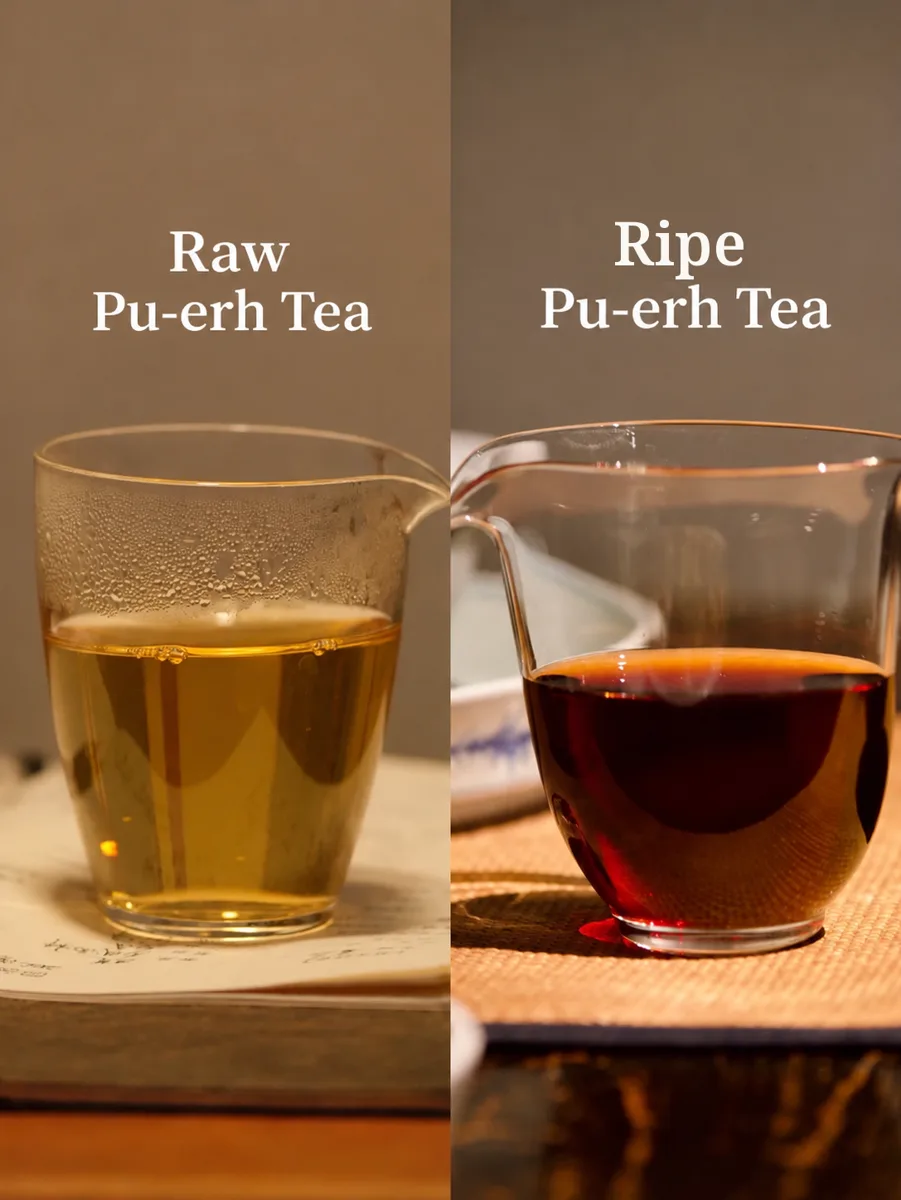
Wet piling changes what’s in the leaf, not only how it tastes. A review comparing processed raw and ripe pu-erh found that ripe tea had far fewer catechins and total polyphenols than raw, with EGCG dropping to almost nothing. Theabrownin, the brown pigment behind ripe pu-erh’s dark liquor, builds up during fermentation (Lv et al., 2013).
| Raw (sheng) | Ripe (shou) | |
|---|---|---|
| Catechins (incl. EGCG) | Higher, similar to green tea | Much lower |
| Theabrownin | Lower | Higher |
| Taste when young | Bright, can be bitter | Earthy, smooth |
| Traditional view | “Cooling” | “Warming”, gentle on the stomach |
So when an article says “pu-erh does X”, ask which pu-erh. Many studies don’t say clearly, which makes their results hard to apply to the tea in your cupboard.
What about naturally aged raw pu-erh?
The twenty-year-old cakes collectors pay serious money for have barely been studied. It’s hard to verify a cake’s real age and storage history, so we’d treat any specific health claim about aged raw tea with suspicion. Buy it because it tastes wonderful.
Pu-erh Tea for Digestion: The Oldest Reason People Drink It
The dim sum tradition
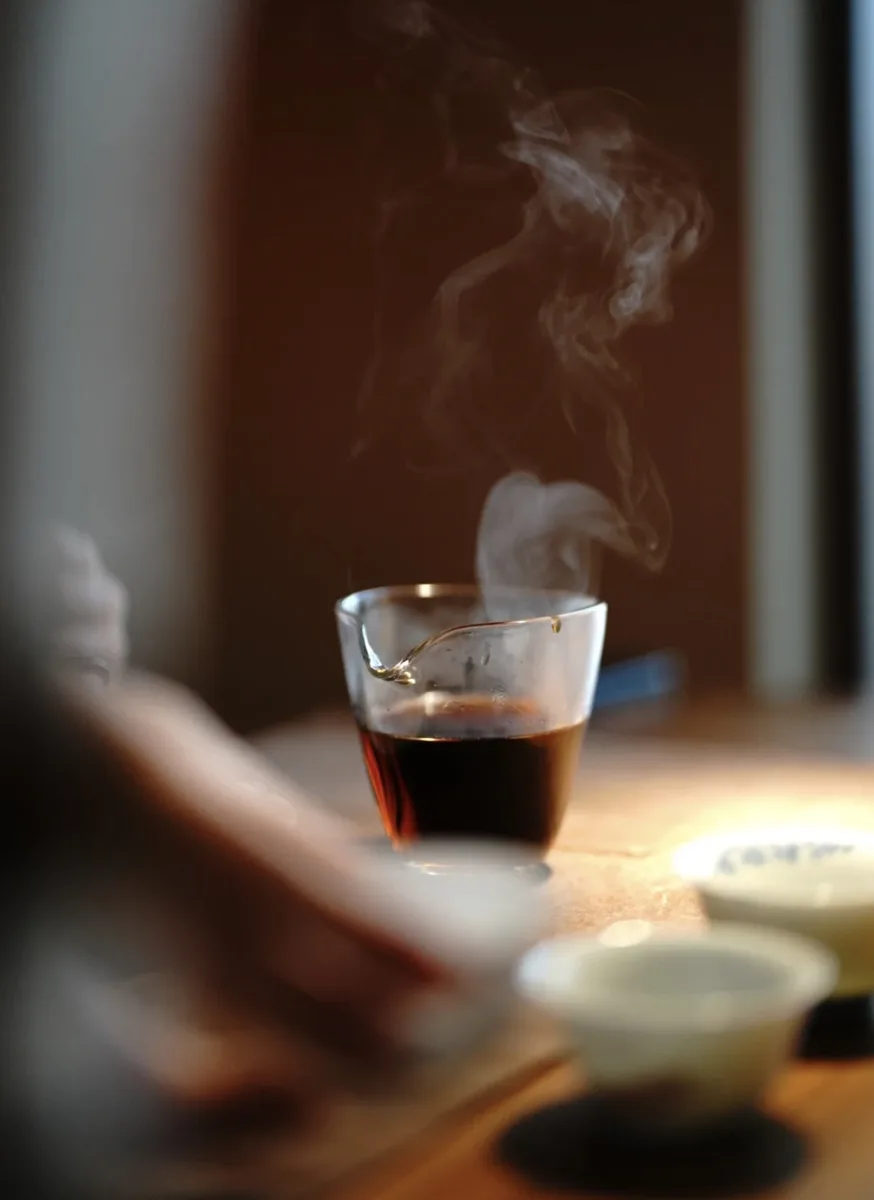
In southern China, ripe pu-erh is the default tea at dim sum. Order a pot at a Cantonese teahouse and there’s a good chance it’s ripe pu-erh (bo lei in Cantonese), served precisely because it pairs with greasy, heavy food. Traditional Chinese tea culture regards ripe pu-erh as “warming” and gentle on the stomach, in contrast to young raw pu-erh or green tea, which are thought of as “cooling” and can feel harsh on an empty stomach.
That’s tradition, not clinical proof. Still, it matches what many customers tell us: after a big meal, a few cups of ripe pu-erh make them feel less heavy, and they find it easier on the stomach than coffee. Personally, after a hotpot dinner, a pot of eight-to-ten-year-old ripe is the only thing I want.
What researchers are looking at
Researchers have started looking at why. A 2019 study in Nature Communications found that theabrownin lowered cholesterol in mice and in a small human group, apparently by changing gut bacteria and bile-acid metabolism (Huang et al., 2019). That’s an interesting lead, but it’s early work, and the doses were measured in ways a teapot isn’t.
Our practical take: if you want a tea for after meals, choose ripe. Young raw pu-erh on an empty stomach is a common cause of the queasy, “tea-drunk” feeling new drinkers complain about.
Pu-erh Tea and Cholesterol: Lab Studies vs Your Teacup
Animal studies
In rats fed a high-fat diet, pu-erh extracts reduced blood lipids. One comparative study found pu-erh and oolong leaves lowered triglycerides more effectively than green tea in that model (Kuo et al., 2005). The theabrownin study above points to one possible mechanism (Huang et al., 2019).
Human trials (using extract capsules)
A randomized, placebo-controlled trial in 90 people with metabolic syndrome gave them pu-erh extract capsules for three months and reported improvements in waist-hip ratio, blood lipids and blood sugar (Chin J Integr Med, 2011).
Important: an extract is not a cup of tea. This trial, like most human pu-erh studies, used standardized, concentrated extract, not tea brewed from leaves. The amount of active compounds in those capsules can’t be converted into a number of everyday cups. The results don’t show that drinking pu-erh will lower your blood sugar or cholesterol, and pu-erh should never replace medication or medical advice for diabetes, high cholesterol or metabolic syndrome.
What this means for everyday brewed pu-erh
Research suggests pu-erh compounds can influence how the body handles fats, mostly in animals and in a few small extract trials. Nobody has shown that two or three cups a day will change your cholesterol in a way your doctor would notice. If you’re managing cholesterol, pu-erh can be part of a pleasant routine, and that’s all it should be.
Pu-erh Tea for Weight Loss: What’s Actually Been Tested
The Japanese extract trial
“Pu-erh weight loss tea” is all over online marketplaces. The best-known human study gave 36 overweight Japanese adults 333 mg of pu-erh water extract, mixed into barley tea, before each of three daily meals for 12 weeks. The extract group showed lower body weight, BMI, waist circumference and visceral fat than the placebo group, with differences from placebo appearing after about eight weeks (Kubota et al., 2011).
Why that doesn’t make it a weight-loss tea
That was a measured dose of extract three times a day, which isn’t the same as brewing a cake at home. A 2022 review of pu-erh chemistry and bioactivity concluded that the limited human trials “hardly convince” the therapeutic claims often made for the tea (Food Research International, 2022).
Where pu-erh can help is simpler. It has essentially no calories. If a pot of ripe pu-erh takes the place of your afternoon soda or sweetened latte, you’ve cut those calories. That swap is doing the work, and the tea makes it easier to stick with.
Other Pu-erh Health Claims: Antioxidants, Blood Sugar and More
Antioxidants
“Packed with antioxidants” mostly describes young raw pu-erh, which keeps a large share of green tea’s catechins. Wodui converts most of those catechins into other compounds, including theabrownins, theaflavins and gallic acid (Lv et al., 2013). These show antioxidant activity in lab tests, but the profile is very different.
Blood sugar, the brain and beyond
You may see pu-erh linked to blood sugar control, liver protection, Alzheimer’s prevention or even cancer. The 2022 review lists antioxidant, antimicrobial, neuroprotective and anti-hyperglycemic activities, almost all from cell and animal studies (Food Research International, 2022). WebMD’s summary is blunter: the benefits of pu-erh for any health purpose are “not well defined” (WebMD).
We’d sooner you hear that from us than buy a tea expecting it to do something it can’t.
Caffeine in Pu-erh and Other Side Effects
Does pu-erh tea have caffeine?
Yes. People are often surprised that ripe pu-erh isn’t caffeine-free. Lv et al. actually measured slightly more caffeine by weight in ripe samples than in raw.
How much ends up in your cup depends far more on how you brew than on the tea itself. Three grams steeped once in a large mug gives you a mild cup, likely well below a coffee. Eight grams in a 120 ml gongfu pot, steeped ten times over an afternoon, adds up to a lot. The U.S. FDA cites 400 mg of caffeine a day as an amount not generally associated with negative effects for healthy adults (FDA).
Common side effects
These are the usual caffeine effects: poor sleep, jitteriness, a racing heart, more trips to the bathroom and, for some people, an upset stomach (especially young raw on an empty stomach). Talk to your doctor before drinking it regularly if you’re pregnant, have a heart condition or anxiety, or take medication that interacts with caffeine.
Mold, mycotoxins and why storage matters
This is the side effect that health articles often skip. The 2022 review notes that mycotoxins and other contaminants have been detected in some pu-erh samples, linked to growing, processing and storage conditions (Food Research International, 2022). Mycotoxins are toxic compounds produced by certain molds. The best known, aflatoxins, come from Aspergillus molds, which tend to grow in warm, damp conditions. The WHO describes aflatoxins as “amongst the most poisonous mycotoxins” (WHO).
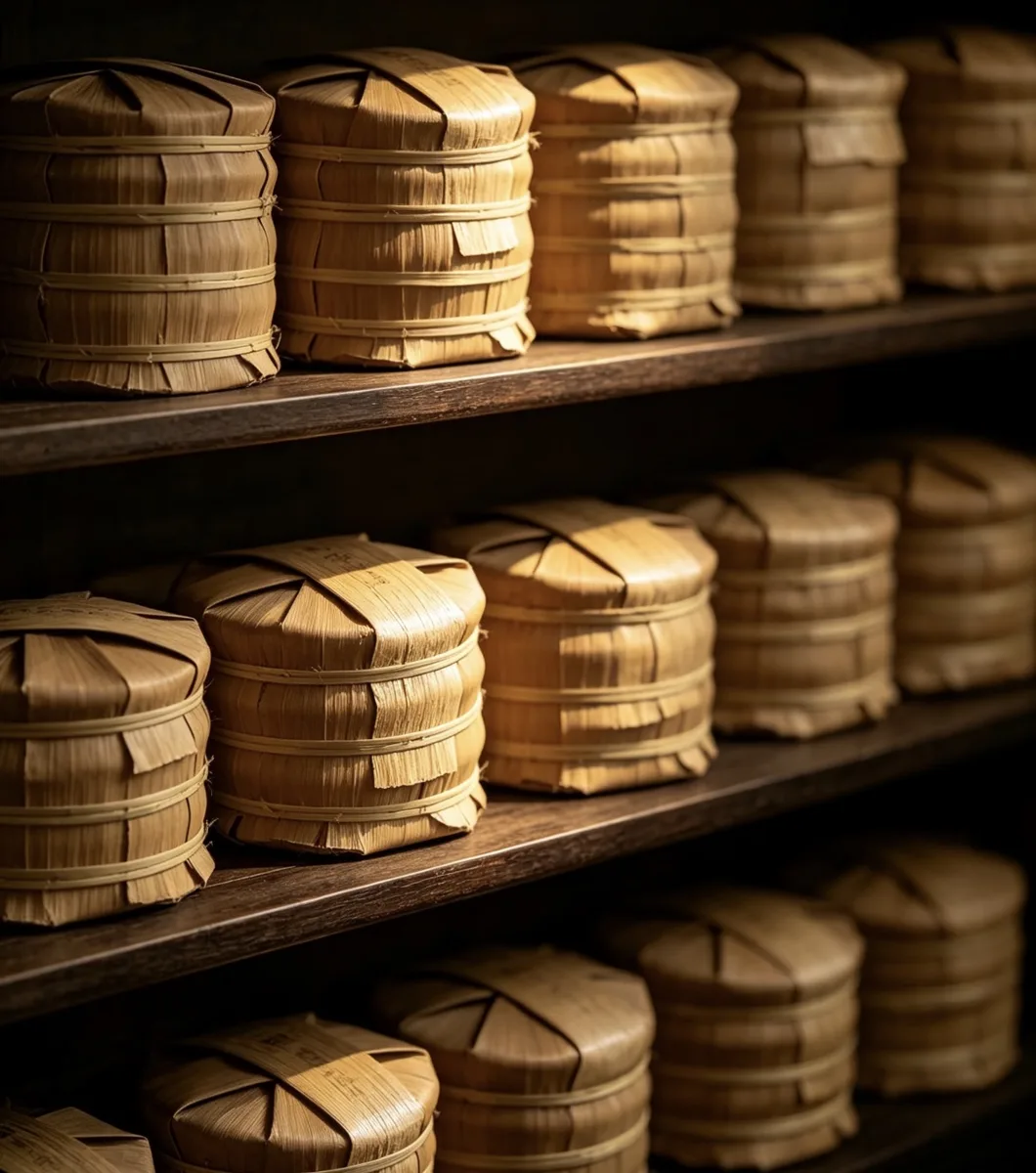
For pu-erh, the risk comes from bad storage, especially tea kept too damp for too long. Some wet-stored teas are kept in more humid conditions to help them age faster. Done carelessly, that can leave a musty, cellar-like smell. What to do:
- Buy dry-stored tea from sellers who can tell you where and how it was kept.
- Smell before you brew. Earthy is normal for ripe pu-erh. Musty, sour or damp-basement smells are not.
- Throw out any tea with visible mold, meaning fuzzy white, green, yellow or black spots. Don’t confuse this with the fine pale “frost” sometimes seen on well-aged cakes. If you’re unsure, don’t drink it.
- Store it properly at home. Our pu-erh storage guide covers humidity, airflow and the containers to avoid.
How to Brew Pu-erh Tea
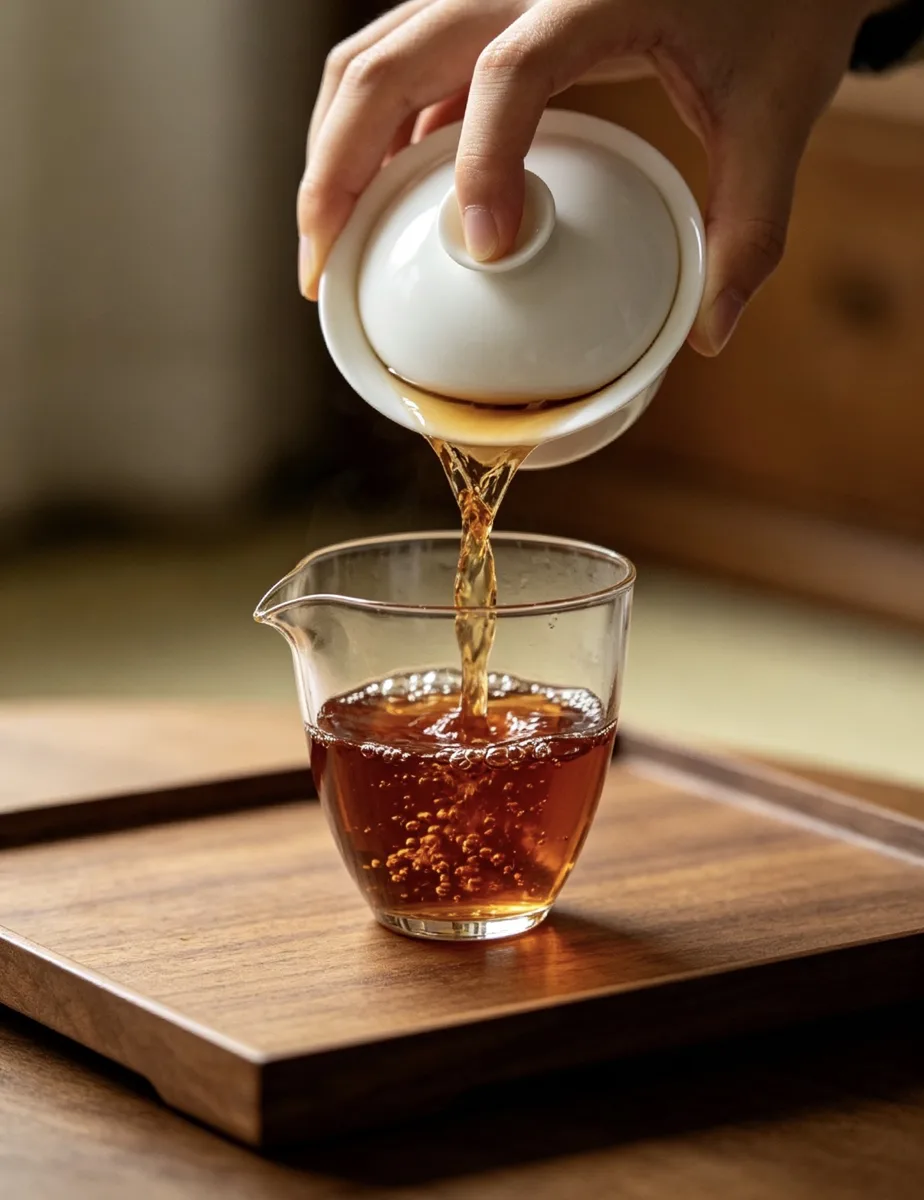
None of the above matters if the tea tastes bad and you stop drinking it.
Gongfu style (for flavor)
- Use 6 to 8 g of tea for a 100 to 120 ml teapot or gaiwan. Pry the leaves gently off the cake with a pu-erh knife, following the layers rather than chopping across them.
- Rinse once or twice with boiling water and pour it away. Ripe pu-erh benefits from two quick rinses. This wakes up compressed leaves and washes off dust from storage.
- Brew with water at a full boil (95 to 100°C). Start with 10 to 15 second steeps and add a few seconds each round.
- A good cake will give 8 to 12 infusions. Ripe pu-erh often stays deep red-brown well into the later steeps.
Western style (for the office)
Use 3 to 4 g per 300 ml mug, water just off the boil, and steep 2 to 4 minutes. Mini tuocha, the small pressed nuggets, are ideal here because there’s no prying involved.
When to drink it
Ripe pu-erh after lunch or dinner. Raw pu-erh in the morning or early afternoon, after you’ve eaten something. If caffeine affects your sleep, stop by mid-afternoon.
New to Chinese tea in general? Start with our Chinese tea for beginners guide before you buy a whole cake.
Best Pu-erh Tea for Beginners: Editor’s Pick
Three teas we reach for when someone asks where to start with pu-erh — for the cup, not for a miracle claim.
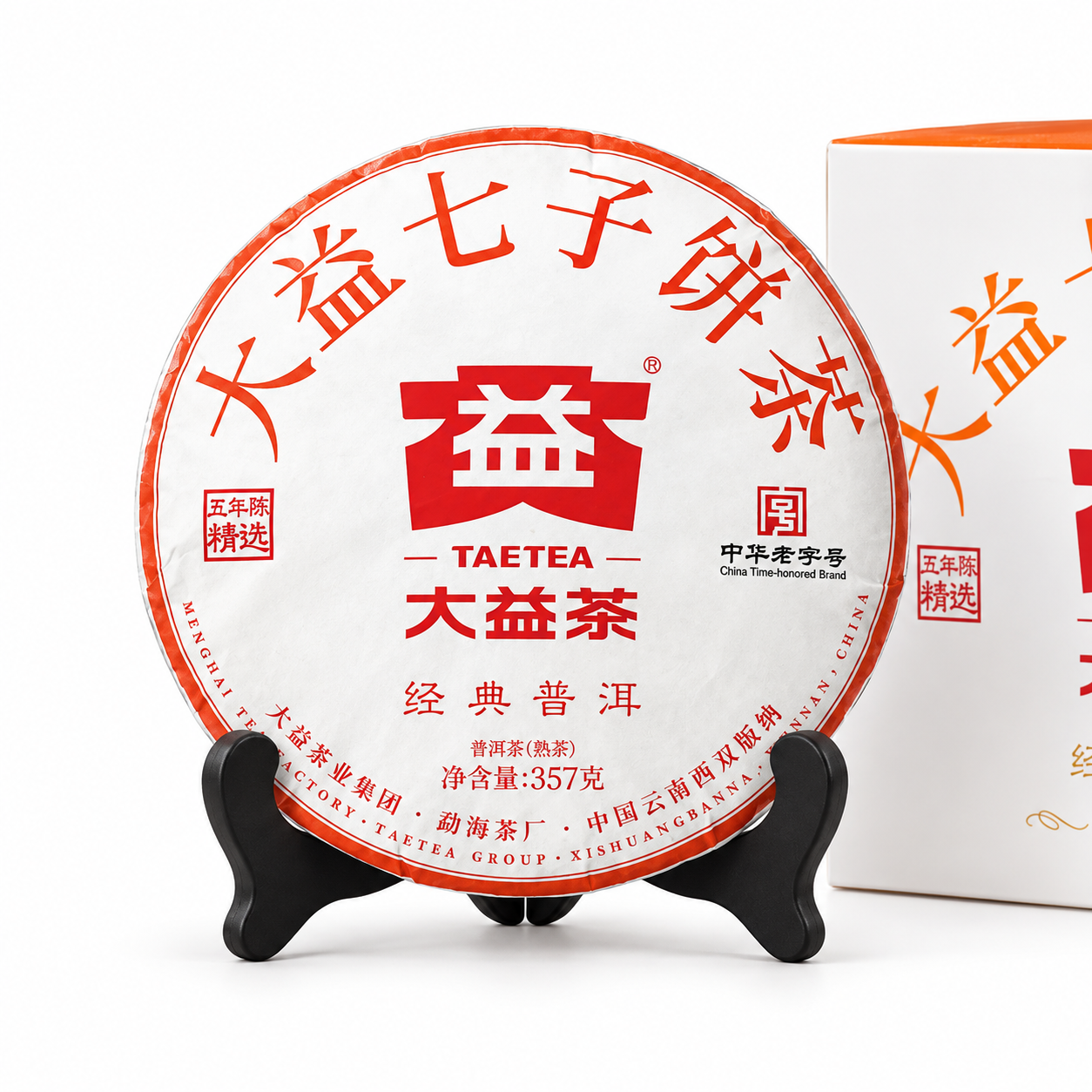
For after meals, try the Dayi Classic 5-Year-Aged Ripe Pu-erh. An everyday ripe pu-erh from one of Yunnan’s best-known factories. Five years of rest has taken off the “pile” smell from fermentation.
For the office, the 2019 Ancient Tree Ripe Pu-erh Mini Tuocha is pre-portioned, so one nugget makes one pot or mug. No knife needed.
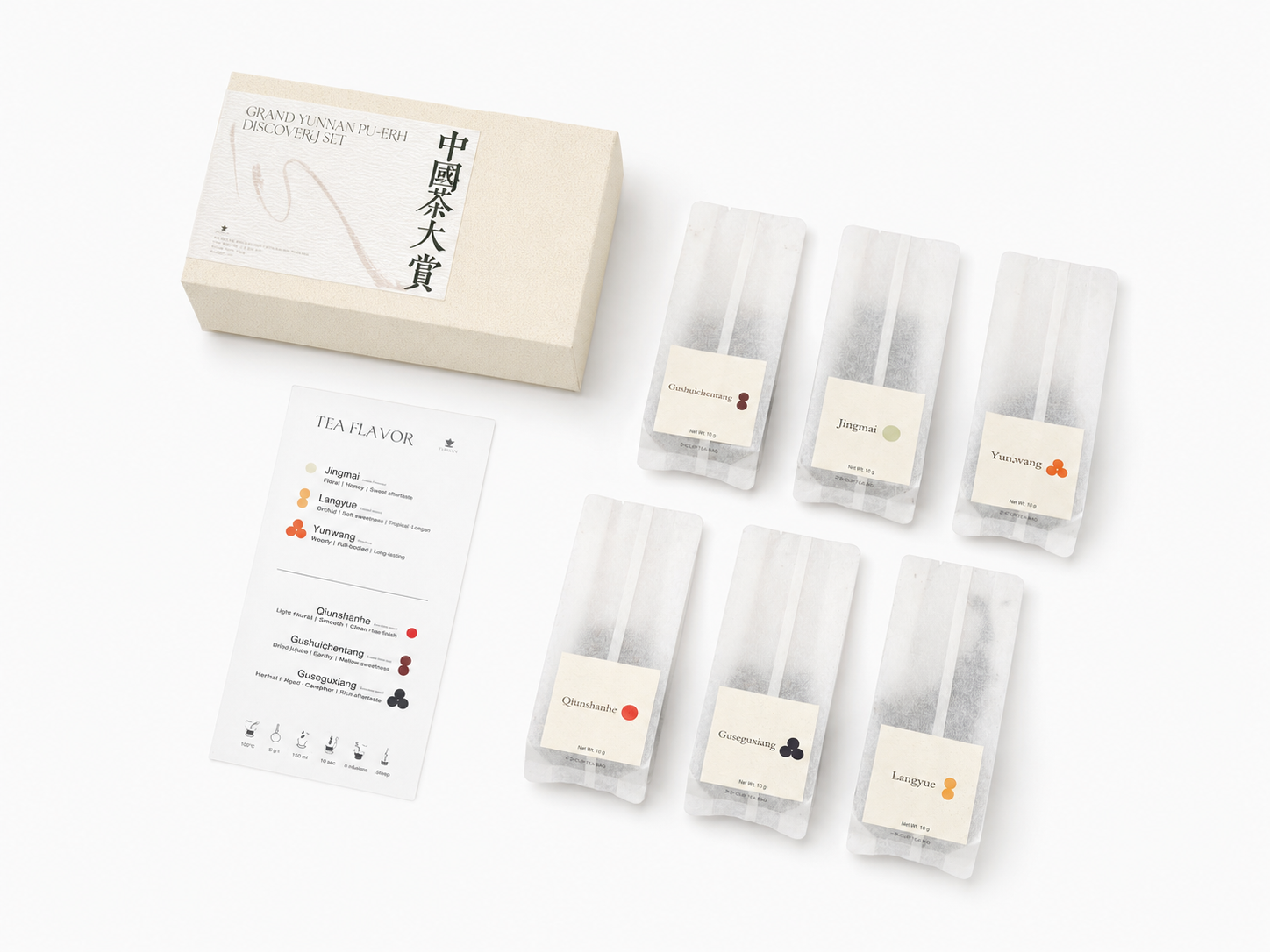
Can’t decide between raw and ripe? The Grand Yunnan Pu-erh Discovery Set gives you six samples, raw and ripe, 60 g total. Taste for yourself what fermentation changes.
The Bottom Line on Pu-erh Tea Benefits
Pu-erh has a long tradition as a digestive tea. Lab work and a few small human trials suggest it may affect cholesterol and body weight, but those trials used concentrated extracts, and the evidence for ordinary brewed tea is still limited. Raw and ripe differ chemically, so claims about one don’t automatically carry over to the other. Buy clean, dry-stored tea, drink it because you like it and because it sits well after a heavy meal, and treat any health effect as a bonus.
Disclaimer: This article is for general information only and is not medical advice. Pu-erh tea is not intended to diagnose, treat, cure or prevent any disease. If you have a health condition, are pregnant or take medication, please consult a qualified healthcare professional before changing your diet.
References
- Lv H-P, Zhang Y-J, Lin Z, Liang Y-R. Processing and chemical constituents of Pu-erh tea: A review. Food Research International. 2013;53(2):608–618. https://doi.org/10.1016/j.foodres.2013.02.043
- Chemical constituents and biological properties of Pu-erh tea. Food Research International. 2022. https://pubmed.ncbi.nlm.nih.gov/35337597/
- Huang F, et al. Theabrownin from Pu-erh tea attenuates hypercholesterolemia via modulation of gut microbiota and bile acid metabolism. Nature Communications. 2019. https://pubmed.ncbi.nlm.nih.gov/31672964/
- Kuo KL, et al. Comparative studies on the hypolipidemic and growth suppressive effects of oolong, black, pu-erh, and green tea leaves in rats. J Agric Food Chem. 2005. https://pubmed.ncbi.nlm.nih.gov/15656692/
- Kubota K, et al. Improvements of mean body mass index and body weight in preobese and overweight Japanese adults with black Chinese tea (Pu-Erh) water extract. Nutrition Research. 2011. https://pubmed.ncbi.nlm.nih.gov/21745623/
- A randomized double-blind placebo-controlled study of Pu’er tea extract on the regulation of metabolic syndrome. Chinese Journal of Integrative Medicine. 2011. https://pubmed.ncbi.nlm.nih.gov/21725873/
- WebMD. Pu-erh Tea: Uses, Side Effects, Precautions. https://www.webmd.com/vitamins-supplements/pu-erh-tea
- U.S. FDA. Spilling the Beans: How Much Caffeine Is Too Much? https://www.fda.gov/consumers/consumer-updates/spilling-beans-how-much-caffeine-too-much
- World Health Organization. Mycotoxins (fact sheet). https://www.who.int/news-room/fact-sheets/detail/mycotoxins