
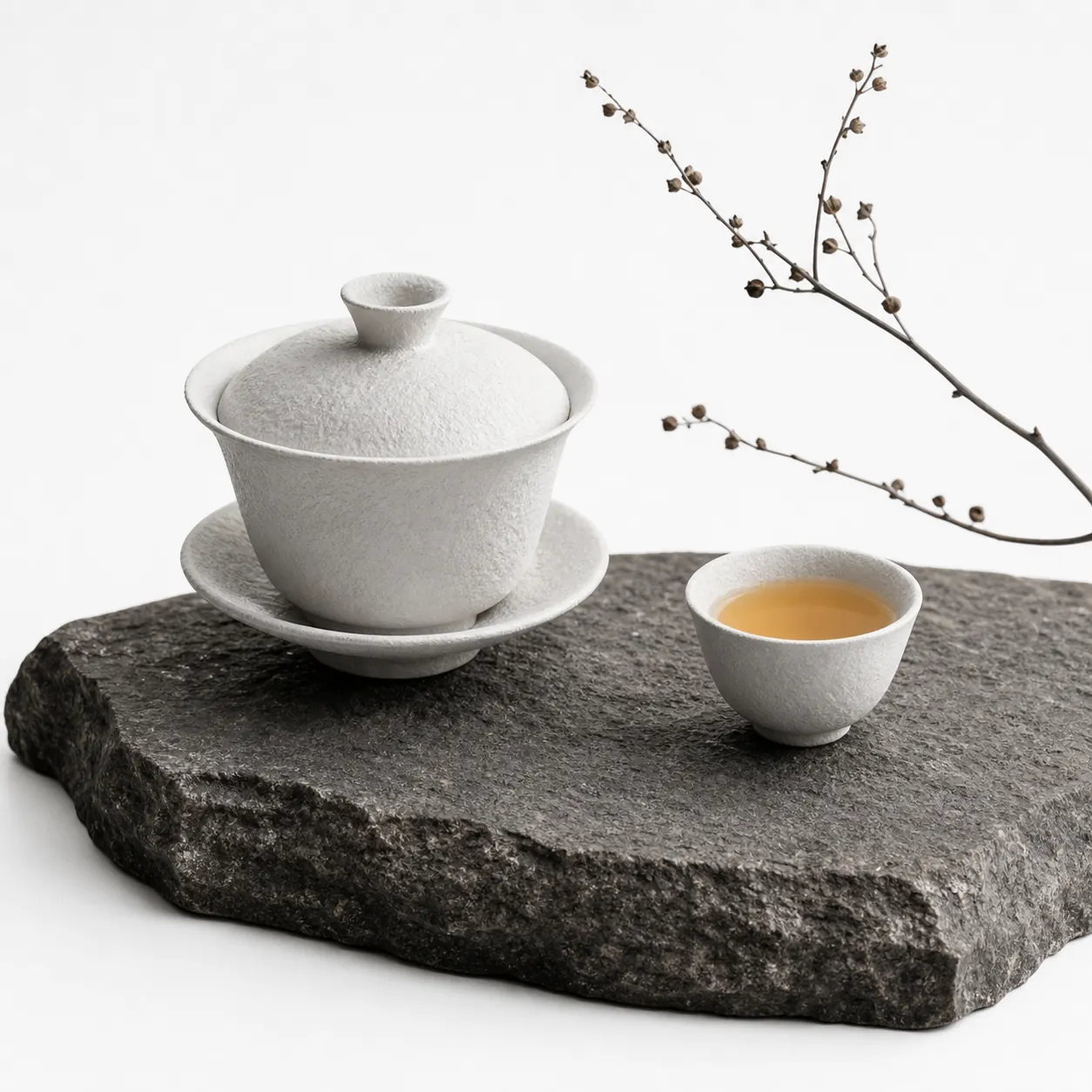
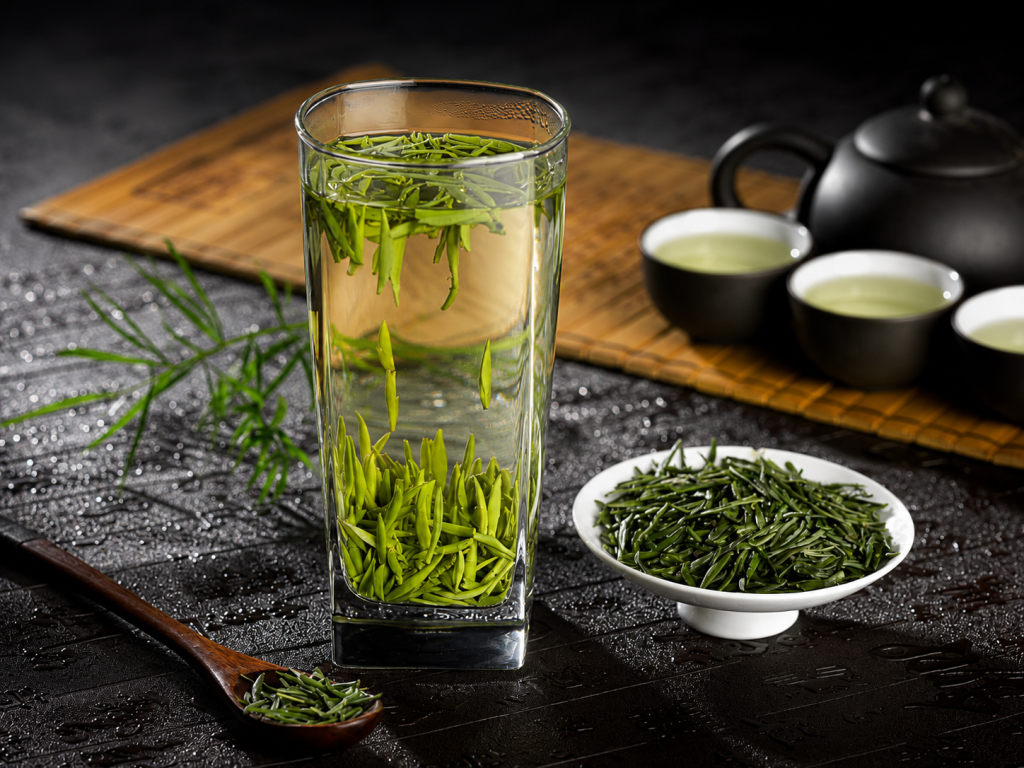
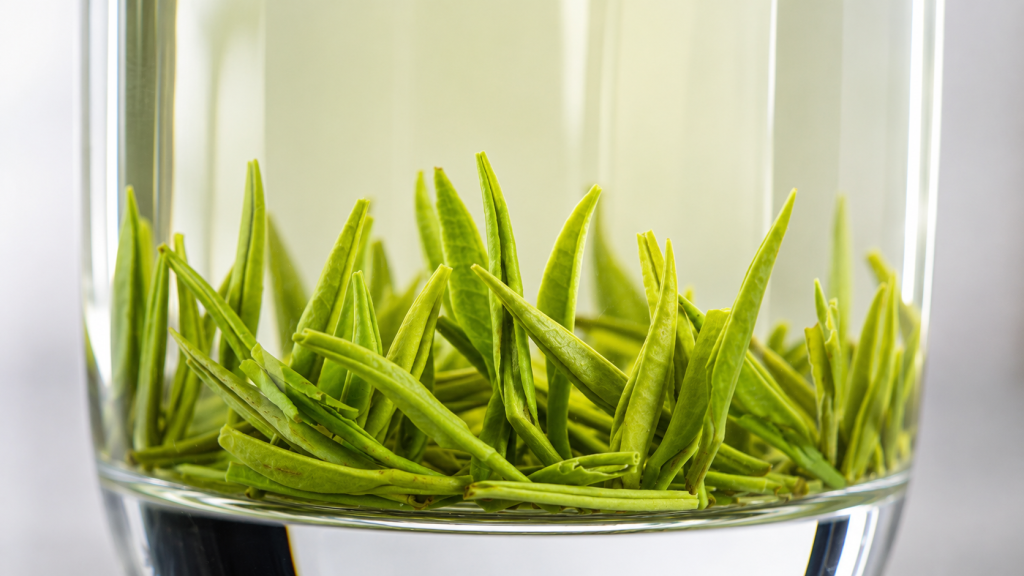
When hot water is poured over tea, some leaves slowly unfold and stand upright in the cup. This is commonly seen in high-grade bud teas such as Xinyang Maojian, Junshan Yinzhen, Baihao Yinzhen, Que She, and Zhuyeqing.
The reason is mainly related to the tea leaf’s shape, density, and water absorption.
A tea bud usually has a thicker stem and a lighter tip. During brewing, the stem absorbs water faster and becomes heavier, while the delicate tip remains relatively light. This creates a bottom-heavy structure, causing the stem to point downward and the bud tip upward.
Small air bubbles may also become trapped on the fine hairs covering the tea bud. These bubbles add buoyancy and help the leaf stay upright.
At first, dry tea often floats because air is trapped inside the leaves. As water enters and the air escapes, the tea begins to sink. Some teas, especially Junshan Yinzhen, may rise and fall several times before settling, creating the famous “three rises and three falls” effect.
However, upright tea leaves do not always mean better quality. This phenomenon mainly depends on the tea variety, bud shape, processing method, dryness, water temperature, and pouring technique.
Tea quality should be judged by its aroma, taste, liquor color, leaf quality, and aftertaste—not simply by whether the leaves stand upright.