For many new tea drinkers,
this can be a major challenge before brewing tea.
How do you pry Pu-erh tea apart?
Which tools should you choose?
What methods should you use?
Many tea lovers have probably had this experience: each time, you carefully hold up a tea needle but have no idea where to begin with the tea cake or brick. Or you insert the needle and break the leaves into tiny fragments, or push it right through the cake or brick. Worse still, your hand slips, and the needle goes straight into your other hand…
So how can you pry tea apart easily without injuring your hands?
01
Tools for Prying Tea Apart
Whether you choose a tea needle or a tea knife
is entirely a matter of personal preference.
First, we need a “weapon” that feels comfortable in the hand: a tea needle or a tea knife.
–Tea needles are relatively common. Note that we are not referring to the bamboo tea needle among the Six Gentlemen of the Tea Ceremony, but a hard metal tea needle (available online), suitable for breaking apart various types of compressed Pu-erh tea.
–A tea knife has a broader surface than a tea needle and is suitable for breaking apart tea bricks, cakes, and tuocha that are loosely compressed or made from relatively coarse, mature leaves. When choosing a tea knife, look for one with a thin blade and a pointed tip. A blade that is too thick is difficult to insert into a tea cake or brick.
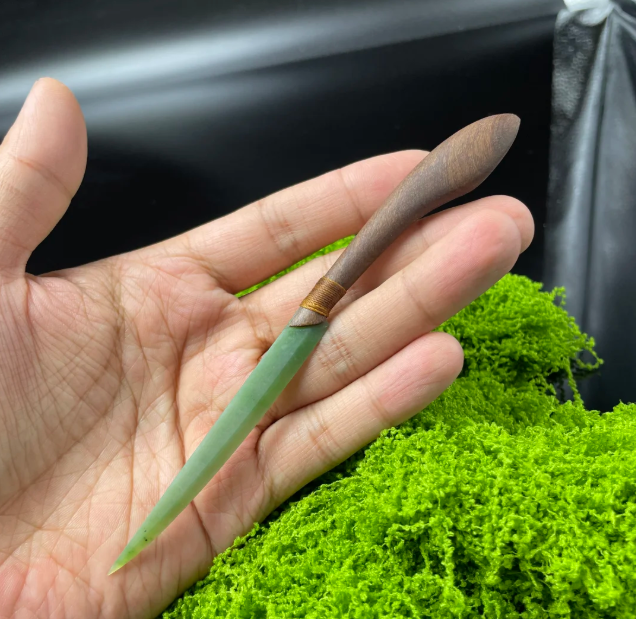
Tea knife
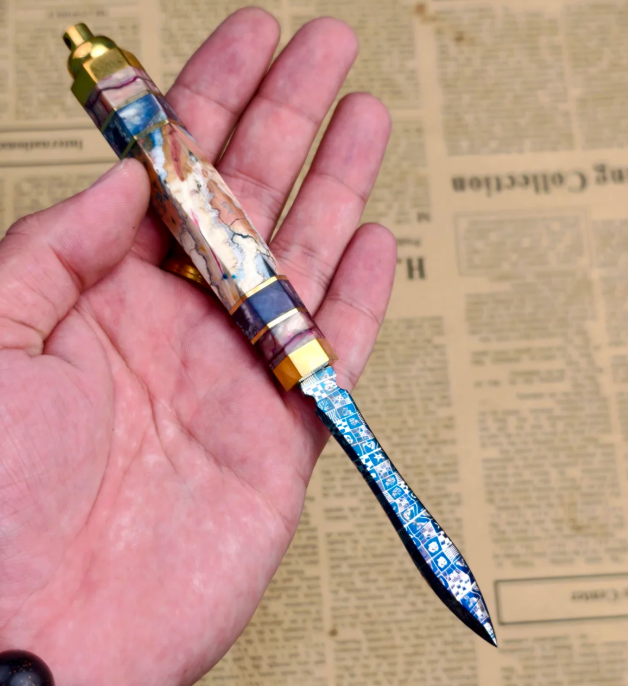
Tea needles
02
Finding an Entry Point for Breaking Open a Tea Cake or Brick
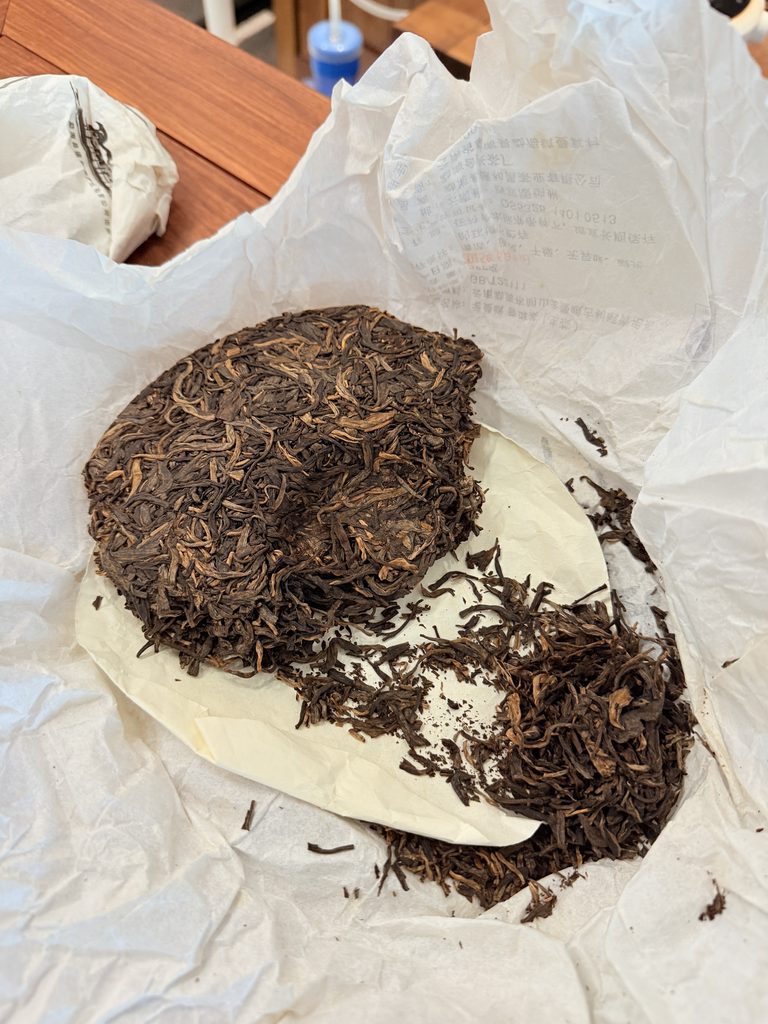
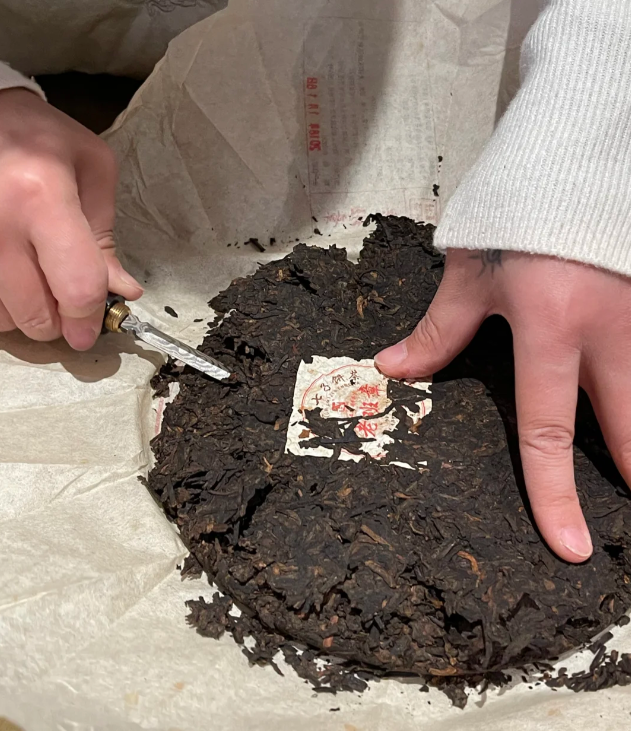
- Tea cakes are usually made of layers pressed together. Therefore, finding the junction between the layers is the most important step. In other words, you need to find the weakest part of the tea cake and insert the knife there.
- Once you have found the entry point, insert the tea knife into the cake along that opening. Note that the first movement is to go vertically deep into the tea cake. The farther the tea knife is inserted, the more stable it becomes.
- Then slowly move the tea knife sideways. In other words, turn the “opening” in the tea cake from a “point” into a “surface.”
- Insert first, then move the knife sideways, and then you can begin prying. Please note that this movement is prying. Using the principle of leverage, slowly pry the tea cake open. Only then can you lift out a whole piece of tea.
- Be careful not to use excessive force when prying tea apart. Do not place your hand in front of the tea knife, to avoid stabbing your hand.
- In addition, the left hand supporting the tea cake should remain as parallel as possible to the angle at which the tea knife is inserted, or the tea should be pried apart at a small angle and a steady speed.
03
How to Pry Apart Different Tea Cakes
If a tea cake is moderately compressed, simply use the normal prying method. If it is more tightly compressed, first place the cake with its curved face down, put both hands on the two sides, and slowly apply pressure. Then press in several other places to loosen the cake slightly and make it easier to pry apart, but be careful not to snap the cake. If the cake is extremely tightly compressed, like an iron cake, you will need to switch to another tool—tea pliers—to break it apart directly.
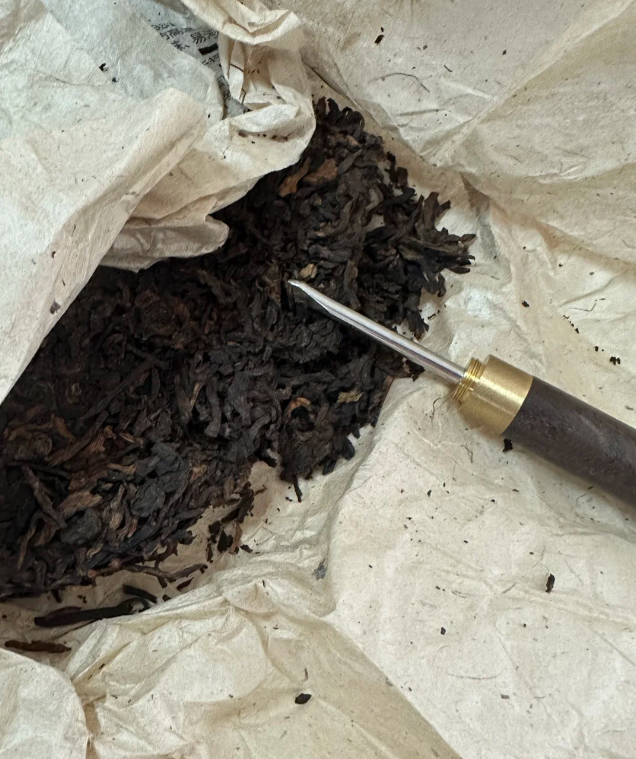
For Pu-erh tea in other shapes, such as bricks and tuocha, the basic methods are the same as long as you understand the principles of prying tea apart. In fact, regardless of the shape, you should work as slowly as possible, prying along the gaps between the leaves and following the direction of the tea leaf strands. This helps keep the tea more intact, prevents it from breaking into too many fragments, and makes it better suited for brewing.
04
It Is Recommended to Break Off Tea as You Drink It
Experienced tea drinkers know that many teas undergo a “waking” step before brewing. They may therefore want to break apart an entire cake and place it in a tea-waking jar, allowing it to wake while they gradually drink it. Why not? For Pu-erh tea, however, breaking it into a pile of chunks may be convenient, but it prevents it from benefiting from “aging together as a compressed whole.” Once a tea cake has been pried into fragments of varying sizes, it loses the support of its compact form, and its surface area in contact with the outside environment increases greatly. It therefore becomes more susceptible to dust, moisture, and unwanted odors in the air, affecting the quality of the tea. For this reason, we recommend simply prying off tea as you need it for everyday drinking. After prying, the remaining tea cake or brick should still be wrapped closely in white cotton paper and stored sealed, away from light.